
How Does an Autonomous Golf Ball Picker Work?
Quick Answer:
An autonomous golf ball picker uses GPS, onboard sensors, and intelligent software to collect golf balls without requiring a driver. After a driving range is mapped, the robot follows programmed routes, detects obstacles, collects golf balls into an onboard trailer, and returns to unload or recharge depending on the system. While features vary by manufacturer, modern autonomous golf ball collection systems are designed to help facilities maintain ball inventory more efficiently while reducing repetitive manual labor.
From Driver to Autonomous Operation
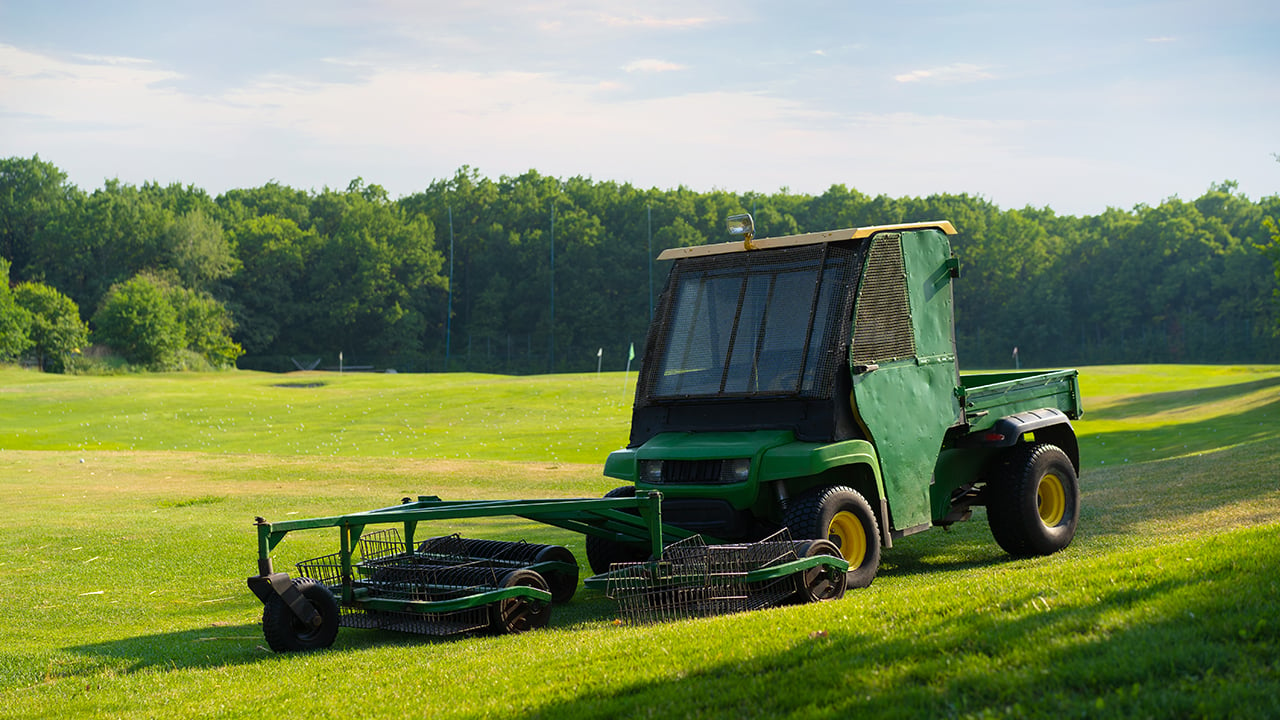
For decades, golf balls have been collected the same way: a staff member drives a utility vehicle onto the range, picks up golf balls, unloads them, and repeats the process throughout the day.
An autonomous golf ball picker performs these same tasks automatically. Instead of relying on a driver, it follows a planned route, monitors its surroundings, and navigates using high-precision GPS and onboard sensors.
The result is more consistent ball collection, allowing staff to spend less time driving the range and more time focusing on customers and facility operations.
Traditional Golf Ball Picker
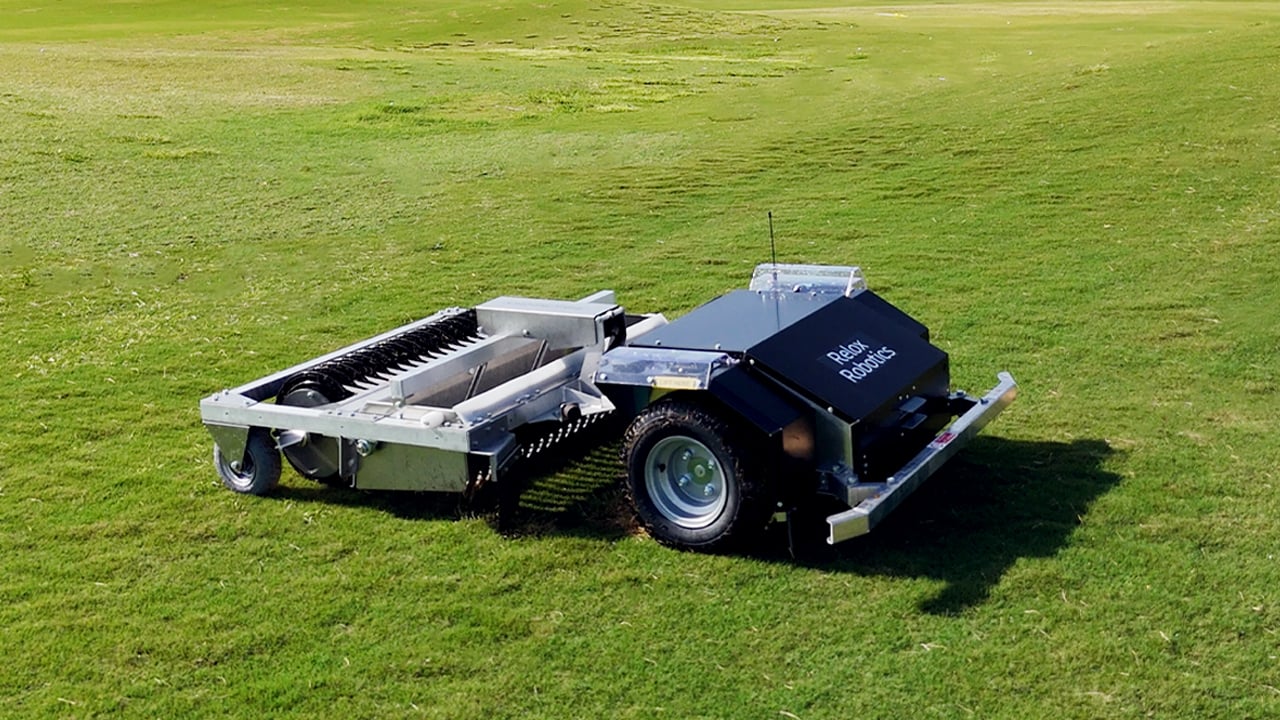
Relox Robotics Range Picker™
Mapping the Driving Range
Before an autonomous golf ball picker ever collects its first golf ball, the driving range must be mapped and configured.
Every facility is different. Practice tees, target greens, drainage areas, cart paths, landscaping, maintenance roads, and no-pick areas all influence how the robot will operate. During installation, the operating area is defined so the robot knows exactly where it should and shouldn't travel.
The mapping process also allows collection routes, slow zones, and restricted areas to be configured based on the facility's layout and daily operations.
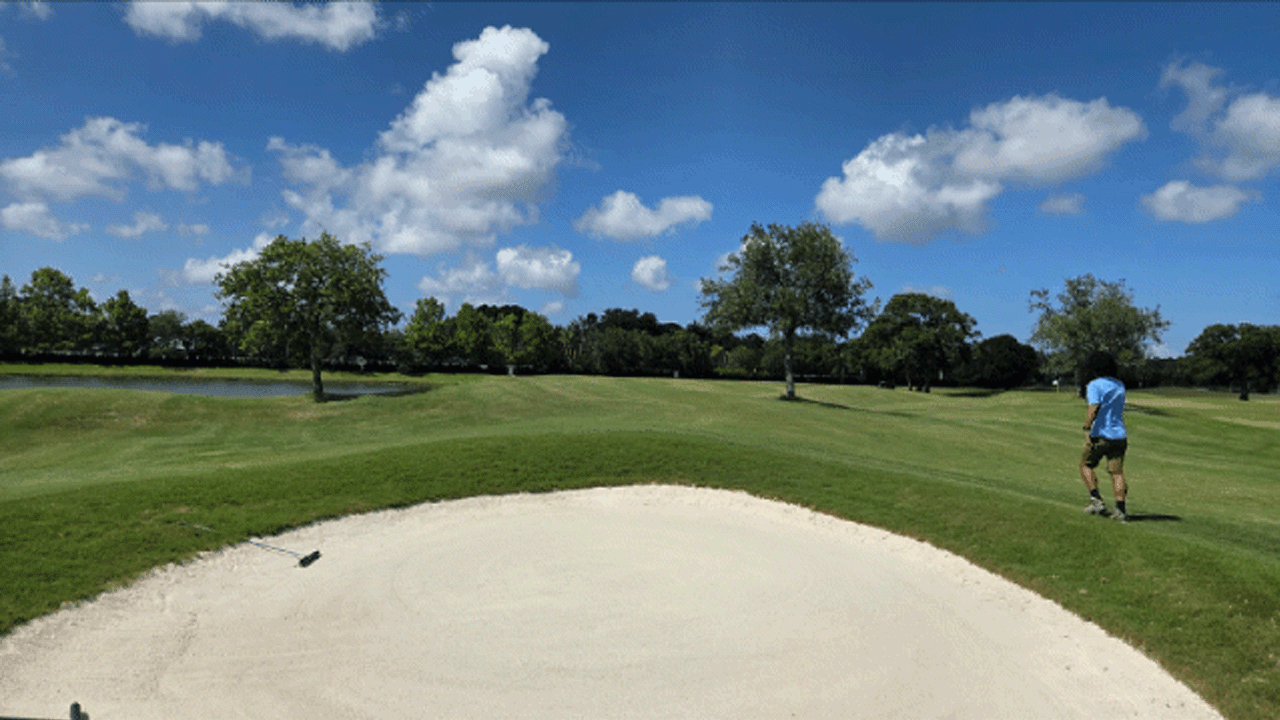
Tyler walking the range with Mapping Kit
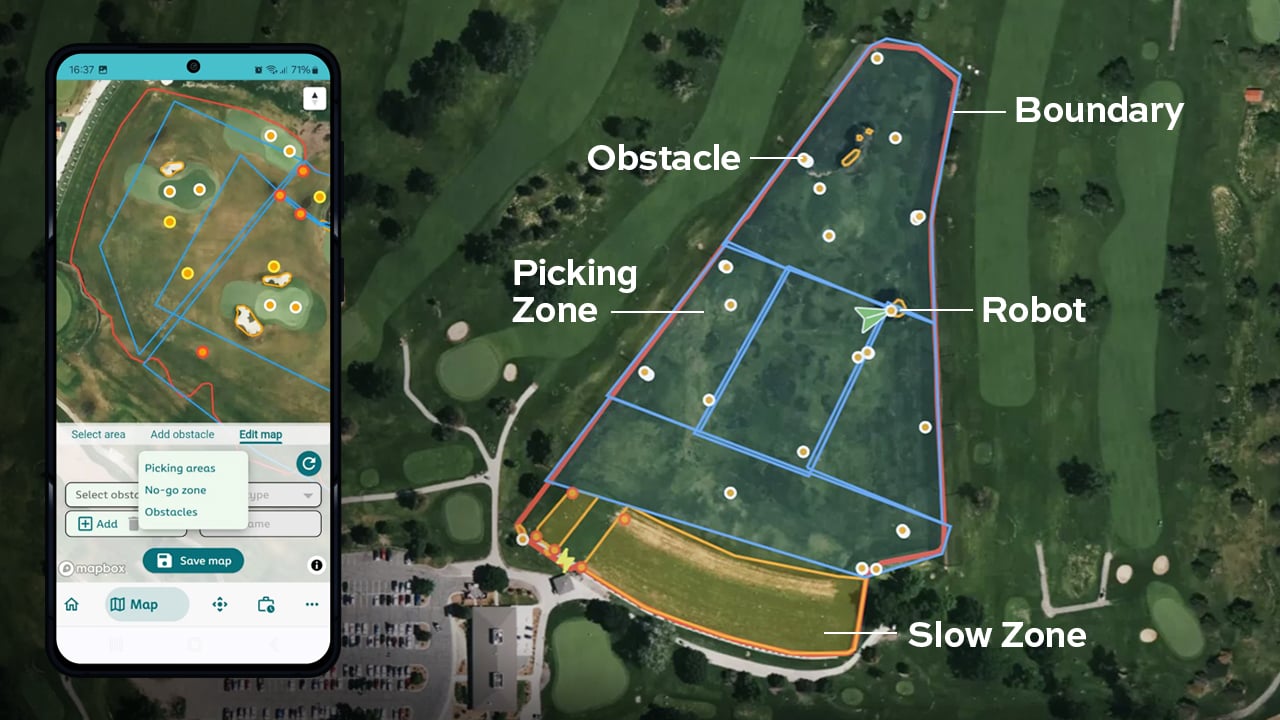
View of Mapped Driving Range in Relox App
-
Operator Insight
Mapping is just the starting point. Every driving range requires collection routes and schedules that fit its unique layout, maintenance routines, and daily operations. It's common to make small adjustments after installation as staff become familiar with the system.
-
OnPar Field Note
Snohomish Valley Golf Center • Snohomish, Washington
Snohomish has seasonal flooding, so it influenced how collection routes and schedules were initially configured. As staff became familiar with the system, those routes continued to be refined to help the robot operate efficiently while minimizing travel through wet areas.
Navigating the Range
Once the range has been mapped, the robot uses its navigation system to travel through the collection area.
Most commercial autonomous golf ball collection systems rely on multiple technologies working together. Depending on the manufacturer, these may include RTK GPS, cameras, ultrasonic sensors, LiDAR, bumper sensors, or other positioning and safety technologies.
These systems help the robot:
| Stay within its designated operating area |
| Follow planned collection routes |
| Slow down in designated zones |
| Detect obstacles |
| Navigate back to its unloading or charging location |
Navigation technology varies by manufacturer, but the goal is always the same: safely and consistently collect golf balls while operating predictably around the driving range.
-
OnPar Field Note
The Relox Robotics Range Picker™ uses RTK GPS, ultrasonic sensors, and a front bumper to navigate the range and detect obstacles. This combination allows the system to operate accurately without requiring buried guide wires.
Collecting Golf Balls
As the robot travels across the range, a rotating pickup mechanism lifts golf balls from the turf into an onboard trailer or collection bin. Capacity varies by manufacturer and model. For example, the Relox Robotics Range Picker™ can hold approximately 1,000 golf balls before returning to unload.
Once configured, collection routes and schedules are automated, allowing the robot to operate throughout the day without requiring an employee to drive the range.
Range Picker Automatically Collecting Golf Balls | Southwest Golf Ranch, OH
-
Operator Insight
The objective isn't to collect every golf ball as soon as it's hit. It's to keep enough clean balls available throughout the day while operating efficiently around customers and staff.
Returning to Unload
Eventually, the robot's collection trailer reaches capacity and the golf balls need to be unloaded.
How this happens depends on the system. Some autonomous golf ball pickers require an operator to empty the trailer manually, while others can unload automatically into an integrated ball handling system. From there, the balls can continue through the washing and delivery process before returning to the ball dispenser for a fully automating ball collection system.
Range Picker Dropping Golf Balls Into an Automated Ball Pit System | Southwest Golf Ranch, Ohio
-
Operator Insight
The unloading system is just as important as the robot itself. Some facilities benefit from an above-ground Bridge system that offers flexibility in placement and future expansion, while others are better suited for a fully automated Ball Pit system. During the planning process, OnPar Automation works with each customer to recommend the solution that best fits the facility's layout, workflow, and long-term operational goals.
-
OnPar Field Note
Southwest Golf Ranch • Lebanon, Ohio
The Relox Robotics Range Picker™ automatically unloads collected golf balls into an automated AOS Ball Pit system. Once transferred, the balls continue through the washing and delivery process, helping create a fully automated ball collection workflow with minimal operator involvement.
Charging the Robot
Like any battery-powered equipment, autonomous golf ball collection robots require periodic charging.
Charging methods vary by manufacturer. Some systems require manual charging, while others are designed to automatically return to a charging station when battery levels become low.
The robot's operating schedule can then resume after charging.
Range Picker automatically returning to charging station | Desert Mountain Club • Scottsdale, Arizona
Remote Monitoring & Scheduling
Autonomous operation doesn't mean operators lose control.
Most commercial systems include software that allows staff to monitor robot activity, configure schedules, and make operational adjustments.
Depending on the manufacturer, operators may be able to:
| Create collection schedules |
| Define operating zones |
| Establish no-pick areas |
| View robot status |
| Receive system notifications |
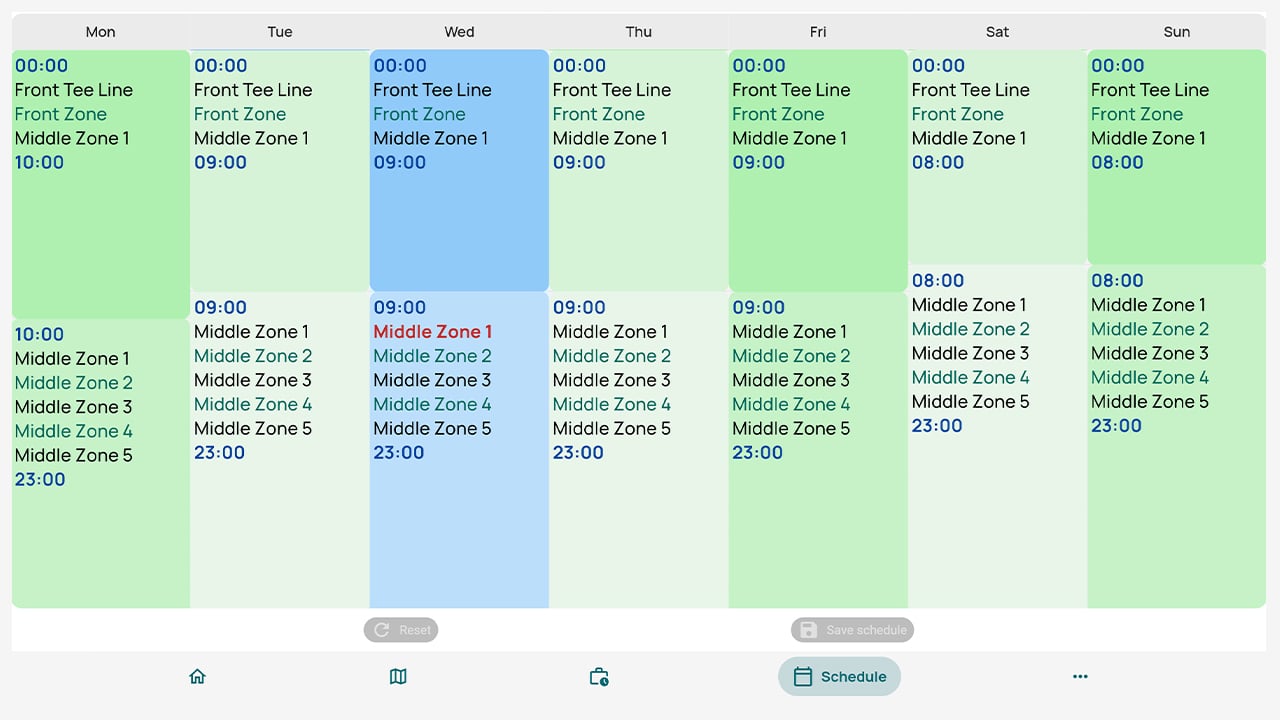
Example of working schedule from the Relox App showing collection times
-
Operator Insight
Collection schedules often evolve after installation as facilities fine-tune operations around mowing schedules, seasonal conditions, and customer traffic.
-
OnPar Field Note
Using the Relox App, operators can manage schedules, collection areas, and system alerts from virtually anywhere. As part of OnPar Support, our team also provides remote assistance, helping customers troubleshoot issues, fine-tune collection schedules, and optimize performance throughout the life of the system.
Fine-Tuning After Installation
Installing an autonomous golf ball picker isn't the final step—it's the beginning of the optimization process.
Once the robot begins operating in a real-world environment, small adjustments are often made to improve efficiency and better match the facility's daily routine. Collection routes may be refined, schedules adjusted around mowing or peak customer hours, and operating zones updated as staff become more familiar with the system.
These changes are typically minor, but they can have a meaningful impact on overall performance.
-
Operator Insight
The most successful installations aren't "set it and forget it." Taking time to fine-tune routes and schedules after installation helps the robot become part of the facility's daily operation rather than simply another piece of equipment.
-
OnPar Field Note
During customer follow-ups, it's common for our team to make small adjustments based on how the facility is using the system. As operators gain experience, schedules and routes are often refined to better fit their workflow.
Training the Staff
Installing an autonomous golf ball picker is only part of the process. Staff also need to understand how the system fits into their daily operation.
Training typically includes:
| Starting and stopping the robot |
| Understanding the customer facing dashboard/ software |
| Adjusting schedules |
| Making minor adjustments to map |
| Performing routine maintenance |
| Responding to alerts |
| Operating safely around the robot |
Hands-on training helps staff become comfortable using the system and gives operators confidence before the installation team leaves the facility.
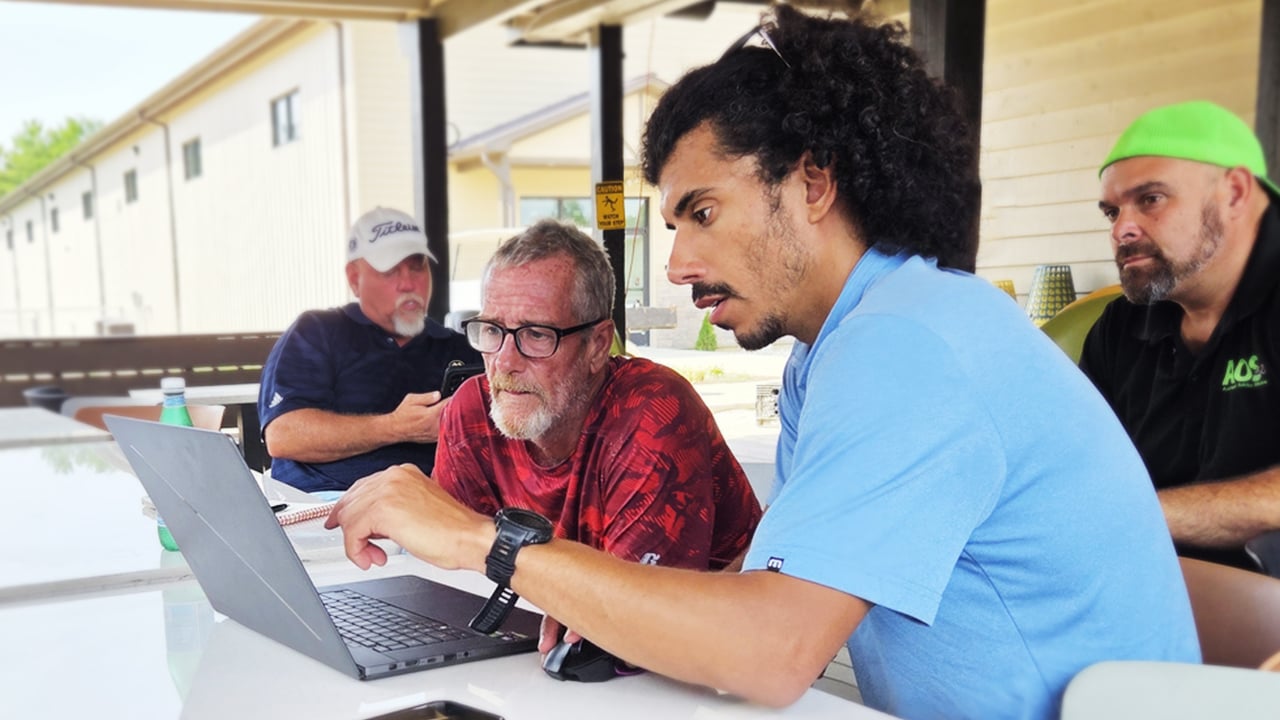
OnPar training staff on how to use the Relox App
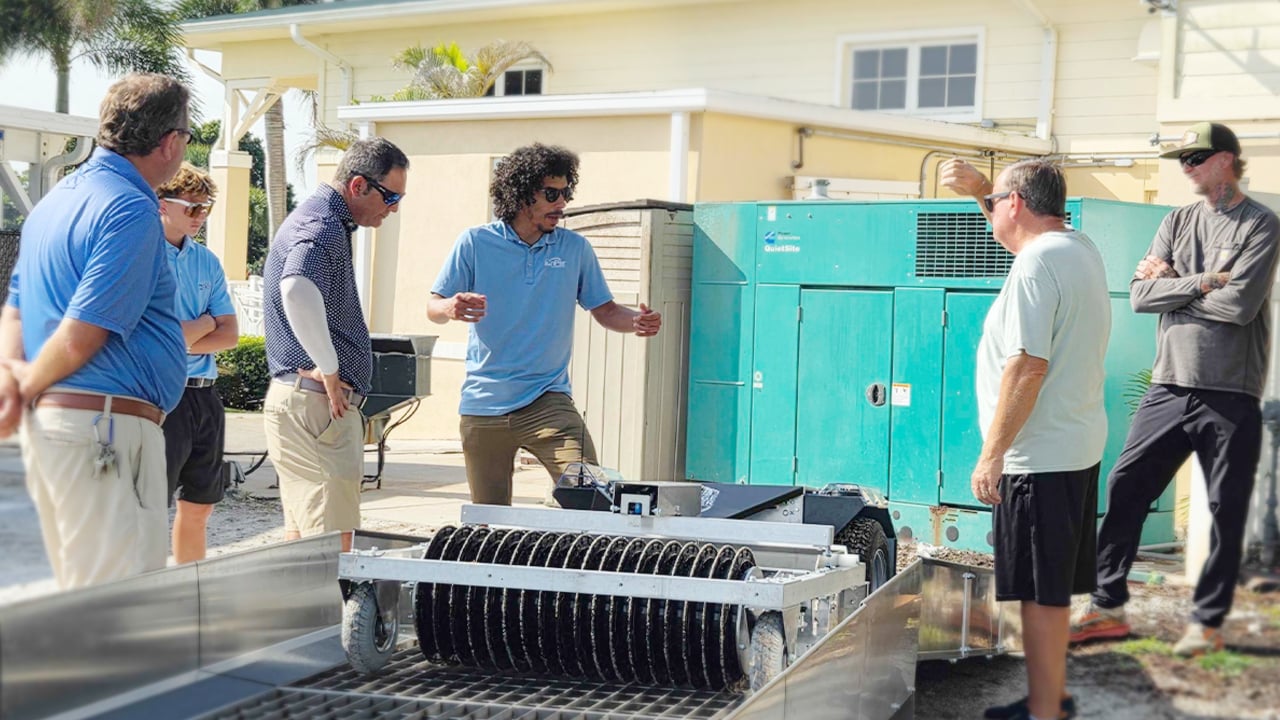
OnPar training staff on the Relox Robotics Range Picker™
Ongoing Support
Like any commercial equipment, autonomous golf ball collection systems perform best when they're properly maintained and supported.
Routine maintenance helps keep sensors clean, charging systems operating correctly, and collection components working efficiently.
Support may include software updates, remote troubleshooting, operational adjustments, and periodic inspections depending on the manufacturer or dealer.
-
Operator Insight
The technology is only part of a successful installation. Proper planning, staff training, and ongoing support often have just as much impact on long-term success.
-
OnPar Field Note
Beyond installation, OnPar Automation provides customer onboarding, remote support, operational guidance, monitoring, and annual wellness visits to help customers get the most from their investment.
Final Thoughts
Autonomous golf ball collection is about more than replacing a utility vehicle with a robot. It's about creating a more consistent, predictable operation that helps facilities maintain ball inventory while reducing repetitive manual labor.
Although manufacturers differ in how their systems navigate, collect, unload, and recharge, the goal remains the same: helping driving ranges operate more efficiently.
At OnPar Automation, we currently install and support the Relox Robotics Range Picker™ throughout the United States. From planning and installation to staff training and long-term support, we help driving range operators determine whether autonomous golf ball collection is the right fit for their facility.
Let's Talk About Your Driving Range
Every driving range is different. If you're wondering whether autonomous ball collection is the right fit for your facility, we're happy to answer your questions and help you evaluate your options.